Carbon Monoxide Alarms

Beat the Silent Killer

Carbon monoxide is an invisible, tasteless, and odourless gas. It occurs when fuels such as propane, gasoline, or wood do not burn completely.

Examples of appliances that may produce carbon monoxide include fireplaces, hot water heaters, furnaces, stoves, barbeques, generators and vehicles.
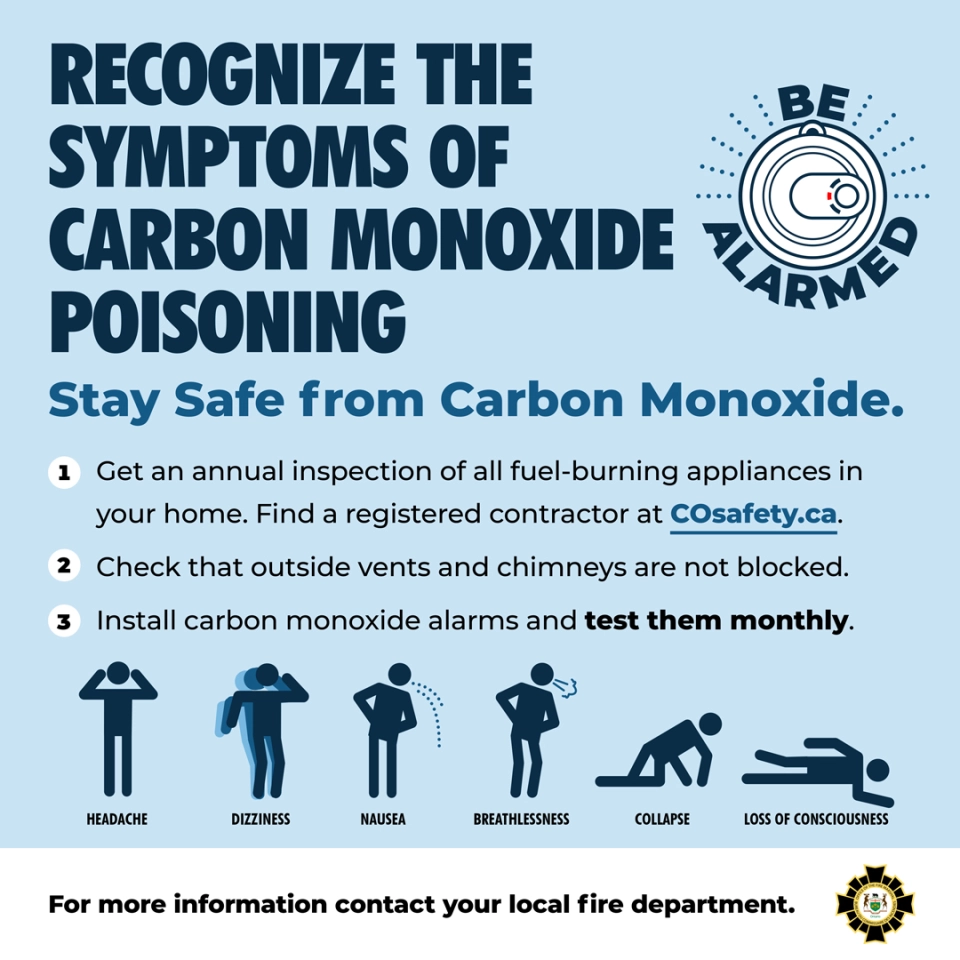
Follow these steps to prevent a carbon monoxide leak in your home:

  • Have all fuel-burning appliances serviced once a year by a licensed contractor.
  • Make sure vents and chimneys are not blocked.
  • Do not use a portable fuel-burning appliance inside (BBQ's, generators).
  • Do not run vehicles in attached garages. Start the vehicle and move it outside.

Carbon monoxide alarms are required outside bedrooms and on every level if: you have a fuel fired appliance in your home, you receive air from a fuel fired appliance outside your home, or you have an attached garage.

Many people believe carbon monoxide sinks low to the ground, like natural gas or propane. Carbon Monoxide actually disperses evenly throughout a room, because it has almost the same density as air. That is why CO alarms can be installed up on the celling, low on a wall, or somewhere in between. Avoid installing CO alarms in corners, as these areas get minimal air flow compared to the rest of the room.


Carbon monoxide alarms use 4 quick beeps to alert the presence of CO. Get out of the house immediately and call 9-1-1 once you are safely outside.

If the alarm beeps once followed by a long pause, it is indicating either a low battery, or that the alarm is expired. 

Check the manufacturer's instructions for full maintenance information. In general,

  • test alarms once a month
  • change the batteries twice a year (some CO alarms have a sealed lithium-ion battery that does not need changing)
  • replace expired alarms (7 to 10 years depending on the type of alarm)